音频游览 Annecy
@计数景点
- 语音导览概要
-
语音导览概要
Update Required To play the media you will need to either update your browser to a recent version or update your Flash plugin.Annecy has the singular destiny of a city with distant origins, exploiting all the resources of a site favored by nature, seizing every opportunity and passing through the centuries while always remaining of its time.
A key town at the mouth of a lake on a transverse axis of the major Italy-Geneva routes, it lies at the crossroads of two areas: the pre-Alpine mountains of the Bornes and Bauges massifs on the one hand, and the lowlands of the Albanian foreland on the other.
Its location is particularly well endowed, with a lake that has become a symbol, the Thiou, a former industrial route that has become a tourist attraction, the vast Semno forest that has remained untouched, the spacious Fins plain that is perfectly suited to unrestricted urbanization, and finally the edge of the Annecy-le-Vieux hillside, a pleasant limit to the northern landscape.
As for its history, its proximity to Geneva was the source of the town's successive promotions, first to become the capital of the county of Geneva when its counts were expelled from their city in the 13th century, then to become a bishopric after the triumph of Calvinism in the 16th century.
Erected as the capital of an apanage of the House of Savoy in the 15th century, it underwent a radical reconversion at the beginning of the 19th century, becoming an active industrial center: a vocation that was to become even more pronounced in the following century, without detracting from its tourist boom.
Translated with DeepL.com (free version)
- 1 L’Impérial Palace
- 2 Plage de l'Impérial
- 3 Le lac
- 4 Le Pasquier
- 5 Pont des Amours
- 6 Gnomon
- 7 Claude-Louis Berthollet
- 8 Jardins de l'Europe
- 9 House of Savoy
- 10 Église Saint-François
- 11 Hôtel de ville
- 12 Centre culturel de Bonlieu
-
语音导览概要
Update Required To play the media you will need to either update your browser to a recent version or update your Flash plugin.Annecy has the singular destiny of a city with distant origins, exploiting all the resources of a site favored by nature, seizing every opportunity and passing through the centuries while always remaining of its time.
A key town at the mouth of a lake on a transverse axis of the major Italy-Geneva routes, it lies at the crossroads of two areas: the pre-Alpine mountains of the Bornes and Bauges massifs on the one hand, and the lowlands of the Albanian foreland on the other.
Its location is particularly well endowed, with a lake that has become a symbol, the Thiou, a former industrial route that has become a tourist attraction, the vast Semno forest that has remained untouched, the spacious Fins plain that is perfectly suited to unrestricted urbanization, and finally the edge of the Annecy-le-Vieux hillside, a pleasant limit to the northern landscape.
As for its history, its proximity to Geneva was the source of the town's successive promotions, first to become the capital of the county of Geneva when its counts were expelled from their city in the 13th century, then to become a bishopric after the triumph of Calvinism in the 16th century.
Erected as the capital of an apanage of the House of Savoy in the 15th century, it underwent a radical reconversion at the beginning of the 19th century, becoming an active industrial center: a vocation that was to become even more pronounced in the following century, without detracting from its tourist boom.
Translated with DeepL.com (free version)
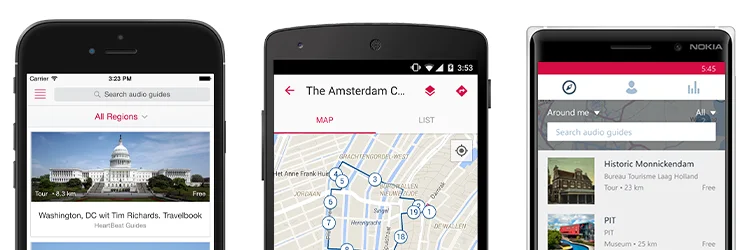
创建您自己的音频之旅!
使用此系统的移动导游应用是免费的