

The Old Court
Update Required To play the media you will need to either update your browser to a recent version or update your Flash plugin.
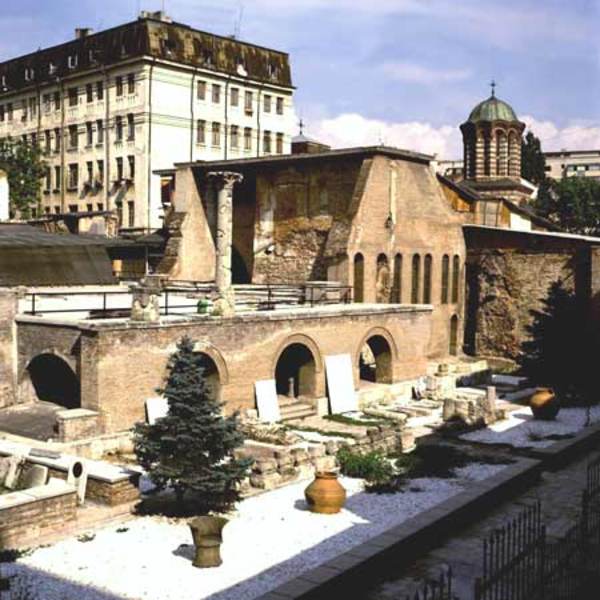
On the left, you can see the remains of the Voievodal Palace – The Princely Court.
This is the oldest feudal monument in Bucharest, which appears to date back to the second half of the XIVth century. Although little is known about the interiors of the court, it seems that it was first erected by Mircea the Old, ruler of Wallachia. Initially, a citadel of approximately 160 square meters, protected by defence ditches, was built. Vlad the Impaler later expanded the construction, between 1458 and 1459, surrounding it with stone walls and making it his princely residence.
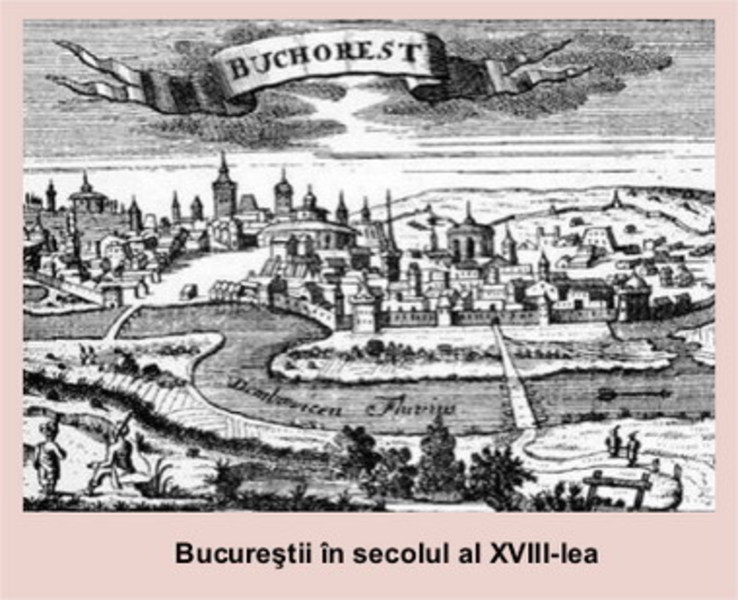
After 1550, Mircea the Shepherd ordered the construction of a palace with large cellars, as well as the “Buna Vestire” (Annunciation) Church that still stands in its vicinity. Over time, the Princely Court underwent several restorations and new walls were built. After the fire and the earthquake of the XVIIIth century, most of it was destroyed, so a new court was built. The Old Court had been the residence of the Wallachian rulers, together with the throne citadel of Târgoviște. Apart from its political role, the citadel was also the economic center of Bucharest, around which merchants and tradesmen would settle. The surrounding streets were named after the occupations of these people or the cities from which they brought their merchandise (Lipscani, Gabroveni, Șelari, Blănari, etc.).
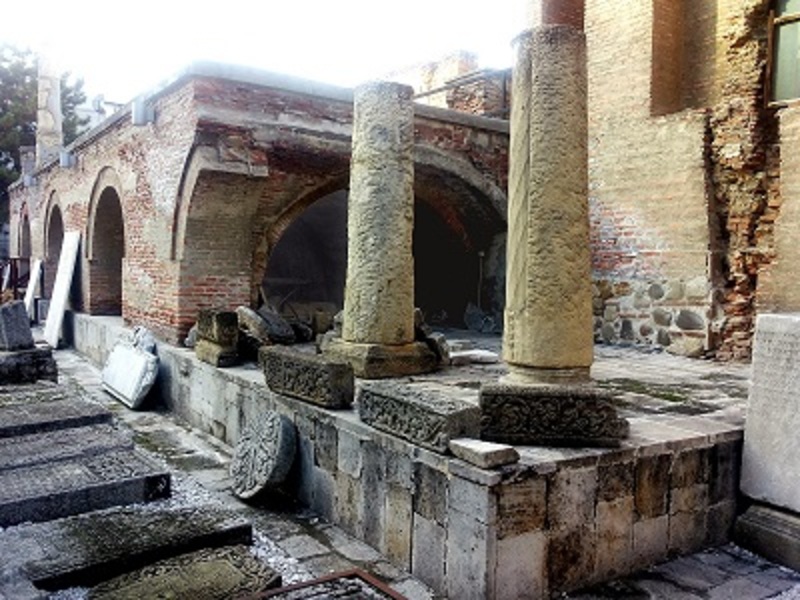
Nowadays, the ruins of the Voievodal Palace have become a protected archaeological site, and a museum - the Old Court Museum - has been founded here. Covering a surface of approximately 5,000 square meters, the museum preserves the ruins of Bucharest’s former Throne Citadel. Inside the museum, you can see the archaeological finds that have been uncovered over time. These items can give you a small insight into what the Old Court used to look like. Among these finds, you may note: the technical building methods from the XIVth to the XIX centuries, the elements of the water supply system, the Turkish baths of the palace, the exterior architectural decorations, the initial interior geometry and the murals.
Also, in the museum’s courtyard, you can see a bust of Vlad the Impaler, which was unveiled in 2003.
On the first Saturday of every month, entrance is free.
This is the oldest feudal monument in Bucharest, which appears to date back to the second half of the XIVth century. Although little is known about the interiors of the court, it seems that it was first erected by Mircea the Old, ruler of Wallachia. Initially, a citadel of approximately 160 square meters, protected by defence ditches, was built. Vlad the Impaler later expanded the construction, between 1458 and 1459, surrounding it with stone walls and making it his princely residence.
After 1550, Mircea the Shepherd ordered the construction of a palace with large cellars, as well as the “Buna Vestire” (Annunciation) Church that still stands in its vicinity. Over time, the Princely Court underwent several restorations and new walls were built. After the fire and the earthquake of the XVIIIth century, most of it was destroyed, so a new court was built. The Old Court had been the residence of the Wallachian rulers, together with the throne citadel of Târgoviște. Apart from its political role, the citadel was also the economic center of Bucharest, around which merchants and tradesmen would settle. The surrounding streets were named after the occupations of these people or the cities from which they brought their merchandise (Lipscani, Gabroveni, Șelari, Blănari, etc.).
Nowadays, the ruins of the Voievodal Palace have become a protected archaeological site, and a museum - the Old Court Museum - has been founded here. Covering a surface of approximately 5,000 square meters, the museum preserves the ruins of Bucharest’s former Throne Citadel. Inside the museum, you can see the archaeological finds that have been uncovered over time. These items can give you a small insight into what the Old Court used to look like. Among these finds, you may note: the technical building methods from the XIVth to the XIX centuries, the elements of the water supply system, the Turkish baths of the palace, the exterior architectural decorations, the initial interior geometry and the murals.
Also, in the museum’s courtyard, you can see a bust of Vlad the Impaler, which was unveiled in 2003.
On the first Saturday of every month, entrance is free.
Все аудиогиды в вашем смартфоне

Опубликуйте собственный аудиотур!
Используйте систему и мобильное приложение абсолютно бесплатно