Musée Egyptological Collections “Edda Bresciani” - University of Pisa
- Téléchargez les liens de l'application
- iOS
- Android
- Windows Phone
Infos Musée
À propos du musée
Welcome to the Egyptological Collections “Edda Bresciani” at the University of Pisa!
You are on the first floor of the palace owned by the Marquises Mazzarosa, which has been hosting our museum since 1994. Nowadays, the Egyptological Collections "Edda Bresciani" at the University of Pisa are a benchmark for scholars and anyone being keen on ancient Egyptian archaeology and history, notably for the importance of the findings from the ancient Nubia area, a region between present-day southern Egypt and Sudan, famous for its gold mines that the Egyptians tried to control, partly by annexing the territories to their kingdom, and that was the site of numerous monumental temples put up at the behest of the Pharaohs.
The museum is divided into two adjoining rooms: in the first room, decorated both on the walls and on the ceiling by stunning 18th-century frescoes, you will find the collection of about four hundred objects named after the archaeologist Michela Schiff Giorgini, who in 1964 decided to donate it to the University of Pisa after years of research carried out at the two Nubian sites of Soleb and Sedeinga.
The coffin with its skeleton placed in the centre of the room was instead brought to Italy at the end of the celebrated joint French-Tuscan scientific expedition to Egypt and Nubia that took place in 1828-29 and included among its protagonists two illustrious figures of Egyptology, the Frenchman Jean François Champollion and the Pisan Ippolito Rosellini.
With regard to this expedition, in the second room, inside an original Egyptian-style cabinet, you will find the collection bequeathed to the University of Pisa in 1962 by Laura Birga Picozzi, a direct descendant of the aforementioned Ippolito Rosellini.
In the other showcases of the room, you will also see on display some of the findings from the excavation campaigns that the University of Pisa undertaken in several Egyptian sites, including Gurna, Saqqara and Medinet Madi, as well as objects from more recent donations. On the other hand, one of the showcases is entirely dedicated to the collection of demotic ostraka from Oxyrhynchus that the university acquired in 1968.
This guide was produced by Eliana Grigoli and Chiara Gavazzi under the supervision of Prof. Flora Silvano, director of the museum.
OPENINGS HOURS
PLAN YOUR VISIT
Programmer votre visite

- Libreria Pellegrini, 10, Via San Frediano, Santa Maria, Porta a Lucca, Pise, Toscane, 56126, Italie
- http:www.egitto.sma.unipi.it/
Pièces exposées
Objets exposés présentés avec fichier audio
-
Room I: About Michela Schiff Giorgini
-
Room I: Pharaoh Amenhotep III at Soleb
-
Room I: the great statues of pharaoh
-
Room I: A portrait of the pharaoh
-
Room I: the trousseau for the afterlife
-
Room I: the servants of the deceased
-
Room I: weighing the heart
-
Room I: lion hunt
-
Room I: gilded bronze mirror
-
Room I: Osiris, the ruler of the underworld
- Loading more exhibits…
Commentaires
Aucun commentaire pour l'instant
Rédiger le premier commentaire- Aucun avis pour l'instant. Soyez le premier à donner votre avis !
Téléchargez l'appli gratuite izi.TRAVEL
- Télécharger sur l'App Store
- Application Android sur Google Play
- Télécharger depuis la boutique de téléphones Windows
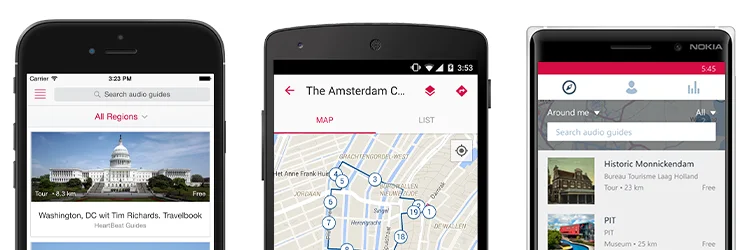
Créez vos propres visites audio!
L'utilisation du système et de l'appli de guide mobile est totalement gratuite