Conspiracy letters
Update Required To play the media you will need to either update your browser to a recent version or update your Flash plugin.
Of all Držić’s troupes of actors, we have pointed out the Pomet troupe or the Pometnici, as the author called them himself. According to the found data, as we do not know how many revivals there were and how often they were performed, the Pometnici staged most of Držić’s works in Dubrovnik. That was his first and obviously most important troupe, at least the first we know of in Dubrovnik, precursor to what would today be called the organized theatre. Those troupes of actors were made of young men, squires or commoners. It is hard to presume if there were any women – actresses, unlike the similar theatre phenomenon that took place in Italy of that time. It is still a partly open and not thoroughly studied question. Apart from the Pometnici, we know of the Njarnjas known for their performance of Skup, as well as the Garzarija, the troupe named after the spinnery Garzarija.
Finally, there was the Bidzaro troupe, assembled for the performance of Hekuba, the only tragedy in the writer’s complete work. It was named after the Ragusan squire family Bizzaro because the members of the troupe were young noblemen. Apart from the fact that theatre plays were an indispensible part of aristocratic weddings, they were also staged in open and closed venues so we can say that Marin Držić’s theatre in Dubrovnik was also an ambient theatre.
In 1552, the writer’s mother Anukla died after having left three quarters of her dowry to the eldest son Vlaho, only one third to Marin and to the other living children nothing but a mother’s blessing.
In 1554, at Vlaho Gučetić’s wedding, the Garzarija troupe performed a partly preserved comedy Džuho Krpeta. The comedies Pjerin, Mande ili Tripče de Utolče and Arkulin, preserved only in fragments, belong to the same period. It is not familiar when exactly they were performed nor in which order.
In 1555 the Njarnjas performed Skup at Sabo Gajčin’s wedding.
In 1556 the pastoral play Grižula was performed at the wedding of the squire Vlaho Sorkočević.
In 1557 Držić was a guest of the squire and writer Mikša Pelegrinović from Hvar.
In 1558 the Dubrovnik authorities opposed to the performance of Hekuba, Držić’s adaptation of the tragedy of the same name written by his contemporary, Italian author Lodovico Dolce and based on Euripides’s tragedy Hecuba. On 9 March Hekuba was banned by the authorities for the first time and then again on 21 May, with an explanation that “the times are such that they cannot stand disturbance.”
Finally, in 1559 the Bizdaro troupe performed Hekuba. It is the last precisely established information about the staging of Father Marin’s work during his lifetime.
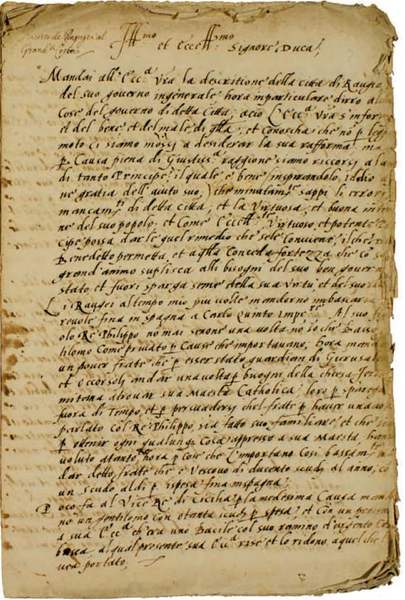
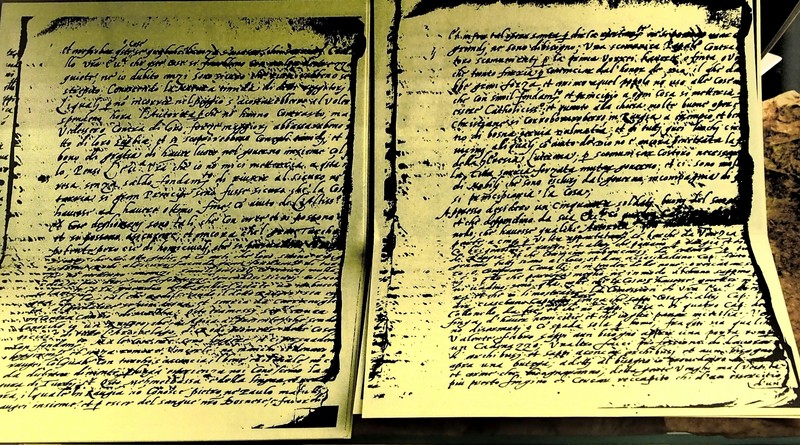
Because of yet another departure to Italy in 1561, Marin legally and by mutual consent broke off all business connections with his brother Vlaho. In December 1562 Držić was in Venice where he was appointed to the post of the chaplain of the Venetian archbishop. In 1563 he stayed for a short time in Dubrovnik to give a statement in court. In late April or early May of 1566, Držić was in Florence, where he wrote his famous five conspiratorial letters to the Tuscan duke Cosimo de’ Medici. They were found in 1930 in the Florentine national archive Archivio di stato by the French Romance and Croatian studies expert Jean Dayre.
The first and by all indications longest letter was not found to this day, and in the others he called upon the duke to use his political, diplomatic, personal, military and financial power to help to bring down the aristocratic regime of the Dubrovnik Republic. The origins and gradual development of that idea could be traced throughout his works all the way to Hecuba. His letters are an attempt to put that idea into action. Considering the author’s very dynamic and turbulent life, as well as the connections he had with many politically active people outside of Dubrovnik, he certainly was in the way of the diplomatically oriented Dubrovnik authorities, known among other things for espionage, because the ambivalent discourse of his comedies was no longer a mere theatre subversion.
However, in 2007, in the same Florentine state archives, historian Lovro Kunčević found the fifth letter to Cosimo, dated 27 July 1566, as well as fragments of the correspondence regarding Držić’s letters between Cosimo de’ Medici himself and his secretary Bartolomeo Concino. This shook some of the major interpretations and the whole question is open even today because there are no credible data that would allow the exact interpretation. What is sure is that the letters written in the atmosphere of extreme fear and anxiety, almost obsessively, in one breath, were dated day after day. He obviously waited for the reply himself as in the fifth letter he announced that he would travel to Dubrovnik, and to then Florentine authorities, that is to say to Cosimo as well, he presented that he had stayed in Florence “for four months for fun”.


Crie seus próprios tours em áudio!
O uso do sistema e do aplicativo de guia móvel é gratuito
