





Solo in Inglese
Lope de Vega House Museum
Update Required To play the media you will need to either update your browser to a recent version or update your Flash plugin.
Two geniuses from Spain’s Golden Age have dominated the world of literature for the last four and half centuries. Lope de Vega and Miguel Cervantes.
Lope de Vega, often called the “Shakespeare of Spanish literature” is without a doubt the country’s greatest playwright. He can claim authorship to at least 1200 plays and some scholars put the number at 1800 (de Vega claimed 1500); novels; innumerable poems both lyrical and non-lyrical. He was an intellect; an adoring father, a rogue and a womanizer, a devout priest and one half of a notorious feud with Miguel de Cervantes.
History indicates that the infamous feud, while originally about literary skills, was fueled primarily by envy and gloating pride. Lope de Vega was hugely successful, reaping financial and social rewards; Cervantes' life far less so. As a member of the Spanish naval elite corps, Infantería de Marina, he was injured and permanently lost the use of his left arm while in Naples. Not long after that he was taken captive and spent five years as a slave in Algiers before being ransomed. It was only upon his return to Spain that he began writing. Cervantes, the author of “Don Quixote”, the greatest novel in the Spanish language and possibly the greatest novel ever written, died destitute.
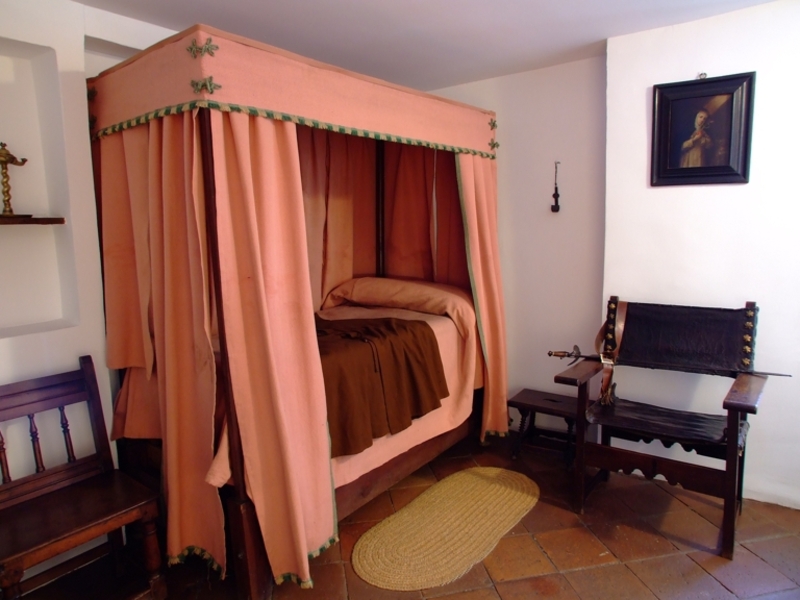
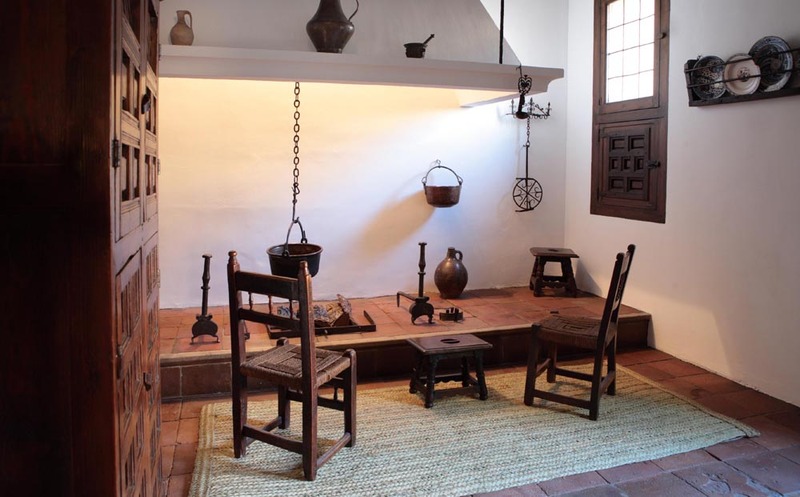
The Casa de Museo we are visiting was Lope de Vega’s home from 1610 until his death in 1635. The house offers an impressively accurate view of everyday life during Spain's Golden Age in the 17th century. Above the entrance, look for the Latin inscription, "Parva propia magna, magna aliena parva" which more or less translates to "What little I have is much; what much others have is little".
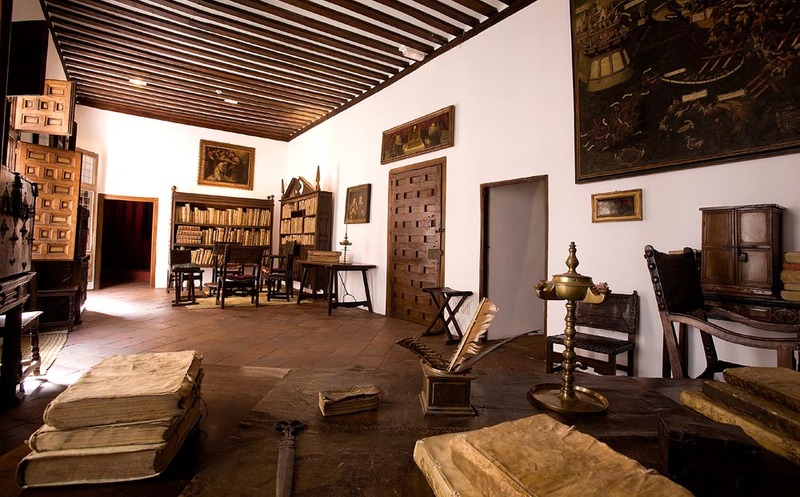
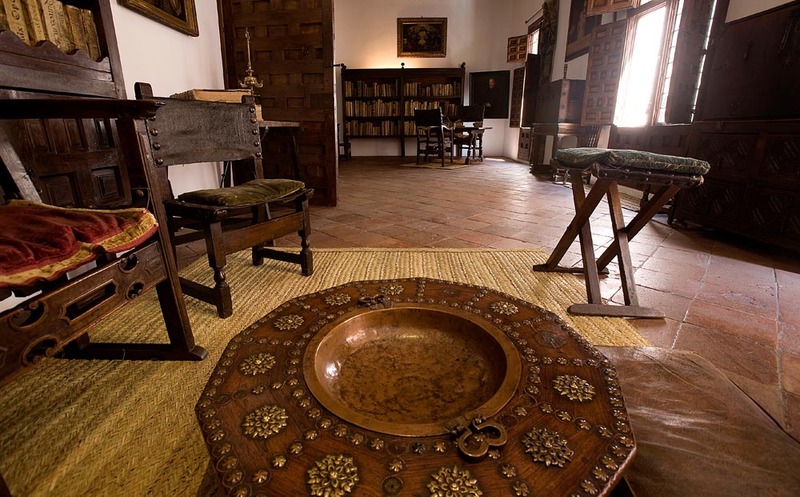
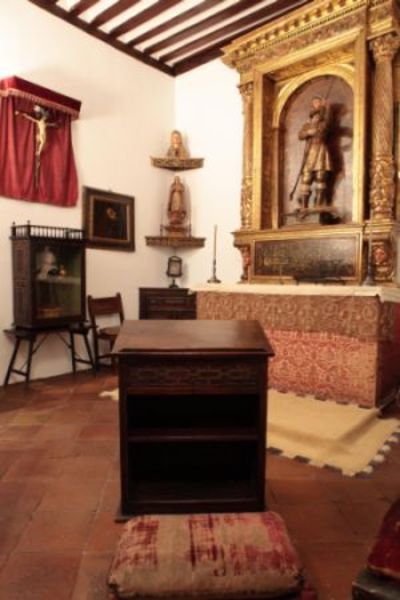
Most of the restoration work was based on Lope de Vega’s personal diaries and letters. Beautifully done, the visitor can’t help but feel as if he has stepped back in time to share the home and a glass of rioja with the playwright. It was within these walls that Lope de Vega penned his greatest work, "Phoenix of Wits". It is a trip back in time, with authentic period furniture throughout and everyday utensils such as whale-oil lamps and pans designed to warm the bed linens on display.
Along with being a prolific writer, de Vega was an avid gardener who would happily spend hours tending his trees, herbs and flowers. A stop in the delightful gardens is well worth the time. The same ancient fruit trees the writer described in his journals are still living, blooming and producing.
Built in 1578, the brick two-story townhouse is 15 meters (16.4 yards) wide. In 1862, the Real Academia Española (RAE and the institution responsible for the regulation of the Spanish language) celebrated the three hundredth anniversary of Lope de Vega’s birth. Concurrently, the RAE planned to acquire the building and convert it into a museum, recreating the times of the dramatist and his art.
It was not until 1931 that actual work began on a complete restoration. Opened to the public as the Casa Museo de Lope de Vega in 1935, the building was declared and protected as a historic-artistic monument the same year.
Fun Fact: Casa Museo Lope de Vega just uphill from the Prado, in the Barrio de las Letras (Neighborhood of the Writers), is on Calle Cervantes – a street named in honor of de Vega’s arch adversary.
Museum hours of operation: Tuesday to Friday 9:30am to 1:30pm (13.30); Saturday 10am to 1:30 pm (13.30). Closed Sundays and Mondays, Public Holidays and the full month of August.
Admission is Free.
Lope de Vega, often called the “Shakespeare of Spanish literature” is without a doubt the country’s greatest playwright. He can claim authorship to at least 1200 plays and some scholars put the number at 1800 (de Vega claimed 1500); novels; innumerable poems both lyrical and non-lyrical. He was an intellect; an adoring father, a rogue and a womanizer, a devout priest and one half of a notorious feud with Miguel de Cervantes.
History indicates that the infamous feud, while originally about literary skills, was fueled primarily by envy and gloating pride. Lope de Vega was hugely successful, reaping financial and social rewards; Cervantes' life far less so. As a member of the Spanish naval elite corps, Infantería de Marina, he was injured and permanently lost the use of his left arm while in Naples. Not long after that he was taken captive and spent five years as a slave in Algiers before being ransomed. It was only upon his return to Spain that he began writing. Cervantes, the author of “Don Quixote”, the greatest novel in the Spanish language and possibly the greatest novel ever written, died destitute.
The Casa de Museo we are visiting was Lope de Vega’s home from 1610 until his death in 1635. The house offers an impressively accurate view of everyday life during Spain's Golden Age in the 17th century. Above the entrance, look for the Latin inscription, "Parva propia magna, magna aliena parva" which more or less translates to "What little I have is much; what much others have is little".
Most of the restoration work was based on Lope de Vega’s personal diaries and letters. Beautifully done, the visitor can’t help but feel as if he has stepped back in time to share the home and a glass of rioja with the playwright. It was within these walls that Lope de Vega penned his greatest work, "Phoenix of Wits". It is a trip back in time, with authentic period furniture throughout and everyday utensils such as whale-oil lamps and pans designed to warm the bed linens on display.
Along with being a prolific writer, de Vega was an avid gardener who would happily spend hours tending his trees, herbs and flowers. A stop in the delightful gardens is well worth the time. The same ancient fruit trees the writer described in his journals are still living, blooming and producing.
Built in 1578, the brick two-story townhouse is 15 meters (16.4 yards) wide. In 1862, the Real Academia Española (RAE and the institution responsible for the regulation of the Spanish language) celebrated the three hundredth anniversary of Lope de Vega’s birth. Concurrently, the RAE planned to acquire the building and convert it into a museum, recreating the times of the dramatist and his art.
It was not until 1931 that actual work began on a complete restoration. Opened to the public as the Casa Museo de Lope de Vega in 1935, the building was declared and protected as a historic-artistic monument the same year.
Fun Fact: Casa Museo Lope de Vega just uphill from the Prado, in the Barrio de las Letras (Neighborhood of the Writers), is on Calle Cervantes – a street named in honor of de Vega’s arch adversary.
Museum hours of operation: Tuesday to Friday 9:30am to 1:30pm (13.30); Saturday 10am to 1:30 pm (13.30). Closed Sundays and Mondays, Public Holidays and the full month of August.
Admission is Free.
Scarica l'app gratuita izi.TRAVEL

Crea i tuoi audio tour!
L'uso del sistema e l'app di guida per dispositivi mobili sono gratuiti